
Lead With Human Skills, Design With Purpose

Today we’re focusing on building your own soft skills workshop toolkit for team leaders, turning complex interpersonal competencies into practical, repeatable sessions. You’ll find guidance, examples, and ready-to-adapt structures designed to help you craft experiences that change daily behaviors, support healthy cultures, and strengthen collaboration without drowning in theory or endless slide decks.

Blueprint for a Customizable Toolkit

Before assembling materials or slides, ground your workshop in observable behaviors, business outcomes, and realistic time constraints. Define who your participants are, what challenges they face, and which soft skills matter most right now. This blueprint keeps your design lean, adaptable, and relevant, ensuring every activity earns its place and each discussion points toward measurable, sustained change leaders can apply immediately.

01

Clarify Outcomes and Behaviors

Replace vague aspirations with specific behaviors participants can demonstrate tomorrow. Instead of “better communication,” aim for “ask one clarifying question before offering a solution,” or “summarize agreements before ending any meeting.” Translate competencies into practical language, then plan activities that surface these behaviors repeatedly. When leaders can see and practice the behavior in context, performance improves and retention naturally follows.

02

Map Competencies to Modules

Group related skills into compact modules that fit distinct time windows. For example, combine listening, questioning, and feedback into a ninety-minute unit with warm-ups, a scenario practice, and a debrief. Keep a consistent pattern so leaders easily navigate the experience. A modular approach lets you swap, scale, or sequence sessions based on priorities, turning one design into many targeted, useful variants.

03

Choose Delivery Modes Wisely

Decide when live facilitation, asynchronous practice, or blended approaches best serve your goals. Complex interpersonal dynamics deserve real-time interaction, while reflection or prep can happen offline. Consider group size, psychological safety, and scheduling realities. The right mix respects attention spans, reduces fatigue, and ensures that experiential moments land deeply, creating space for leaders to explore, stumble, and grow without performative pressure.

Role-Plays Anchored in Reality
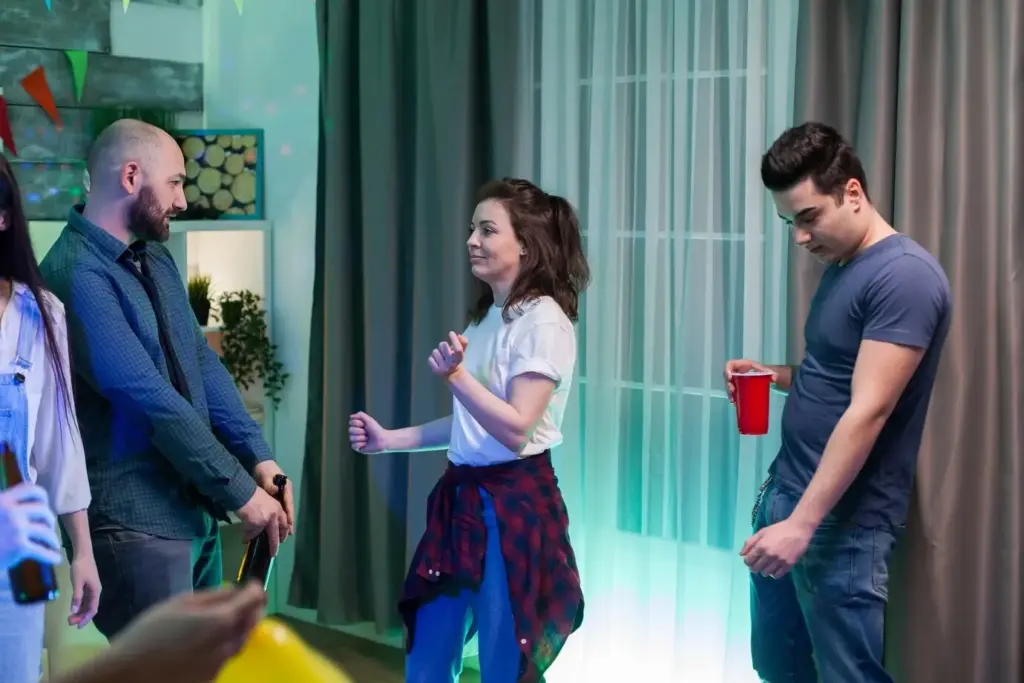
Use scenario prompts drawn from recent incidents, customer escalations, or cross-team friction. Assign roles with clear motivations and constraints, then rotate perspectives so leaders experience opposing viewpoints. Avoid scripted lines; encourage improvisation guided by goals. Debrief immediately, capturing specific phrasing that worked. Participants often request those phrases as on-the-job cheat lines, creating continuity between practice and real conversations.

Micro-Challenges and Reflection Ladders

Break complex skills into short, repeatable challenges leaders can complete in under ten minutes. Pair each challenge with a reflection ladder: what happened, why it mattered, what to try next. These small wins accumulate into durable habits. Invite participants to share one surprising insight in chat or a shared document, creating a living library of tactics the whole team can reuse confidently.

Peer Coaching Circles

Form trios where each person rotates through the roles of speaker, coach, and observer. Provide a timing card and prompts that nudge toward curiosity, not advice-giving. Observers capture exact language, emotional shifts, and turning points. Many leaders discover their default patterns—rescuing, arguing, or withdrawing—through this structure, and learn gentle, effective ways to invite new paths forward during difficult moments.

Facilitation Skills for Team Leaders

Psychological Safety From Minute One

Open with agreements that protect experimentation: listen fully, ask before advising, disagree respectfully, and honor confidentiality. A short warm-up—such as sharing a recent micro-misstep and what it taught—normalizes imperfection. Leaders who go first model courage, lowering defenses. When people feel respected and unjudged, they risk honesty, and honest dialogue accelerates growth faster than any polished lecture or cleverly animated slide.

Guided Debriefs That Stick

After every exercise, debrief with a predictable arc: what happened, what patterns emerged, what language helped, and how will we apply this tomorrow. Ask for specific quotes worth stealing. Capture commitments publicly in a concise board. The repetition sharpens attention and builds a shared vocabulary leaders can deploy instantly under pressure, transforming fleeting workshop insights into repeatable, team-wide muscle memory.

Handling Resistance With Curiosity

When someone checks out or challenges the process, treat it as useful data. Ask what success would look like for them, or what risk they’re trying to avoid. Mirror their words to show understanding, then propose a small, time-boxed experiment. Most resistance softens when people feel heard and see a path that respects their concerns while still moving the group forward productively.

Measuring Impact and Iterating

Soft skills can be measured through behavior, not buzzwords. Define leading indicators before you teach, then track them rigorously. Combine quick surveys, observational rubrics, and operational metrics like cycle time or rework. Iterate based on evidence, not vibes. When leaders see progress reflected in daily outcomes, credibility rises, momentum builds, and the toolkit becomes a trusted engine for continuous improvement.

Behavioral Leading Indicators

Identify early signals that behaviors are taking hold: increased clarifying questions in standups, fewer meeting overruns, faster conflict resolution, or more peer-to-peer recognition. Track frequency, not perfection. Small, consistent upticks predict downstream performance gains. Share these snapshots with teams to celebrate progress and maintain enthusiasm, making the connection between conversation quality and tangible business results visible, motivating, and actionable.

Mixed-Method Assessments

Blend quantitative scores with qualitative insights. Pair pulse surveys and commitment tracking with observation notes and short narrative reflections. The combination reveals patterns hidden by numbers alone, especially around psychological safety or inclusion. Encourage anonymous stories about moments that felt different after practice. These stories not only inform iteration, they energize participants who realize subtle changes are already reshaping collaboration meaningfully.

Templates, Tools, and a Sample Agenda

Save time with reusable templates that guide design, facilitation, and follow-through. Provide a one-page canvas, a slide skeleton, scenario cards, a timing plan, and feedback forms. Include a sample ninety-minute agenda that leaders can tailor. When the logistics are handled, facilitators focus on presence, curiosity, and connection—the ingredients that actually move hearts, shift habits, and elevate collaborative performance meaningfully.

One-Page Workshop Canvas

Capture audience, desired behaviors, agendas, scenarios, and debrief prompts on a single page. This visual map prevents scope creep and clarifies trade-offs when time gets tight. Share it with stakeholders before delivery to align expectations. Afterward, mark what landed and what missed, building a transparent record you can iterate, remix, and reuse across teams without reinventing the structure every time.

Slide Skeleton and Visual Cues

Use a minimal slide set to frame exercises, not dominate them. Include timers, color-coded section headers, and a few anchor visuals that reinforce key models. Reserve generous white space for live annotations. Simple, consistent cues reduce cognitive load, help participants stay oriented, and signal transitions smoothly, allowing the conversation and practice to remain the core of the learning experience.

Adapting for Remote and Hybrid Teams

Digital Collaboration Tactics

Pair breakout rooms with shared notes so ideas persist beyond the moment. Invite silent brainstorming through chat or boards to include quieter voices. Rotate roles—facilitator, scribe, challenger—to distribute ownership. Keep instructions visible while people work. The clarity reduces confusion, maximizes participation, and creates artifacts that serve as living references, bridging the gap between workshop insights and daily execution effectively.

Energy Management Online

Design sessions with frequent micro-transitions: quick polls, reactions, or one-minute reflections. Use stretch breaks and hydration reminders to respect human limits. Alternate high-intensity practice with quieter processing. When leaders leave feeling energized rather than drained, they’re more likely to test new behaviors immediately, building early wins that compound and proving remote learning can be both humane and high-impact consistently.

Inclusive Participation Across Time Zones

Offer mirrored sessions or rotating times so different regions share the load. Provide recordings with timestamped highlights and clear prompts for asynchronous practice. Collect questions ahead of time and address them on air to honor contributions from everyone. This equitable design signals respect, improves engagement, and ensures that soft skills growth becomes a shared experience rather than a convenience for a few.
Zokepazonunopatunifuka
Privacy Overview

This website uses cookies so that we can provide you with the best user experience possible. Cookie information is stored in your browser and performs functions such as recognising you when you return to our website and helping our team to understand which sections of the website you find most interesting and useful.